
Lysosomal disease begins with lipid the cell can no longer clear. UNDC-005 is designed to clear it.
The disease, and how UNDC-005 is proposed to act
UNDC-005 is an orally administered hydroxypropyl-alpha-cyclodextrin (HPαCD) complexed with sodium caprate in a proprietary clathrate formulation, designed to act as a physico-chemical lipid-lysosomal modulator.*
* “Lipid Lysosomal Modulator” is a Company-descriptive term for UNDC-005’s proposed mechanism and is not an FDA-recognised drug classification.
- 01A loss-of-function mutation disables the NPC1 transport protein in the lysosomal membrane
- 02Cholesterol and other lipids are trapped inside the lysosome
- 03Lysosomal pH rises and the hydrolases — its digestive enzymes — stop working
- 04Autophagy fails, inflammation persists, and neurons die
- 01Taken by mouth; about 50% is absorbed into the bloodstream
- 02Captures phospholipids and sphingolipids in circulation, which the kidney excretes in urine
- 03The lower lipid load relieves lysosomal stress and switches off mTORC1
- 04TFEB enters the nucleus and activates the CLEAR network of lysosome and autophagy genes
Schematic summary of the sections below. The mechanism of UNDC-005 is proposed and has not yet been evaluated in Company-sponsored clinical trials. UNDC-005 is in-licensed by Myra EB Bio under an exclusive, worldwide, royalty-bearing agreement.
What goes wrong inside the cell
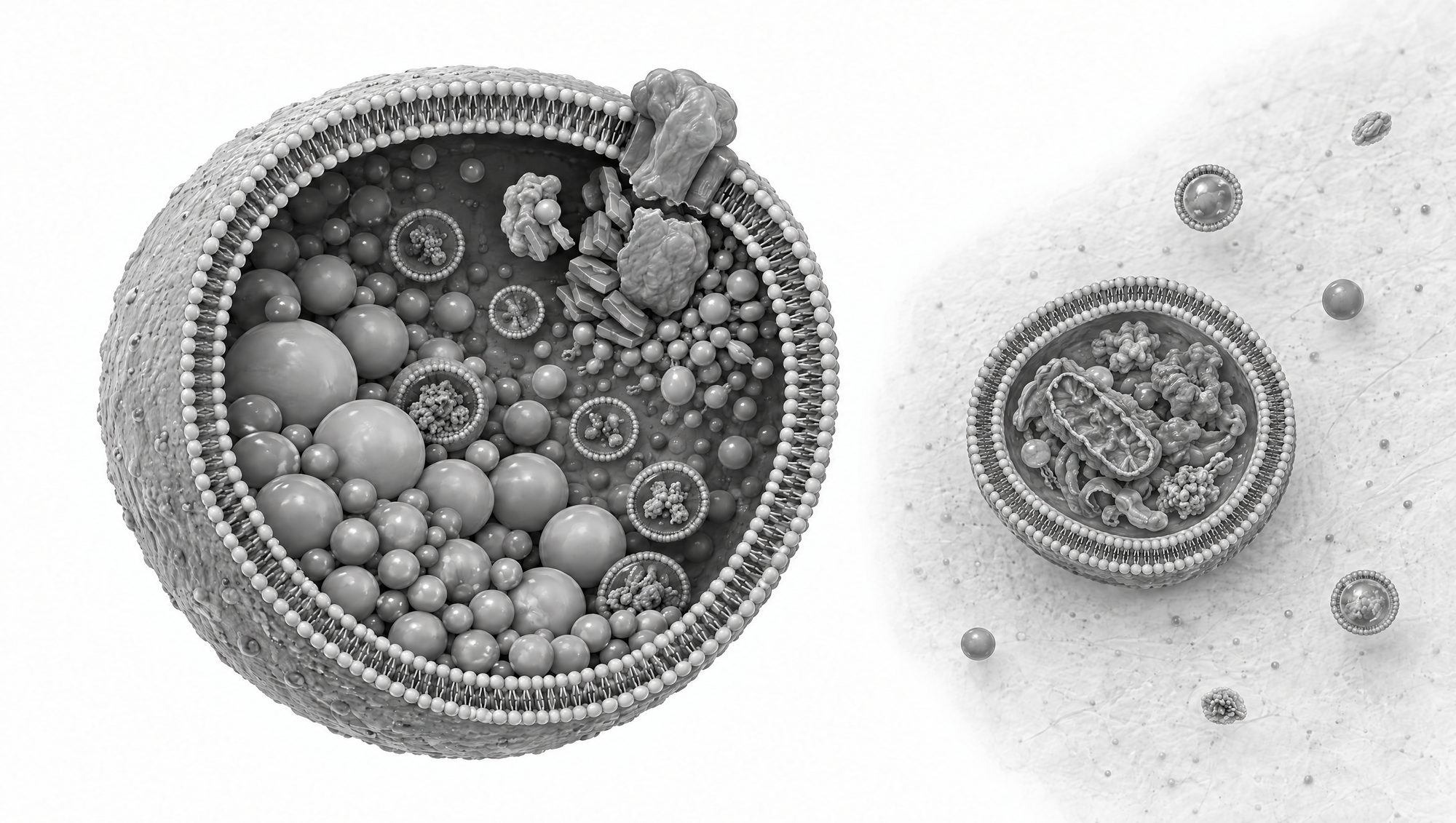
- 1Lysosomal membrane
- 2NPC1 transport protein, broken
- 3NPC2, holding cholesterol
- 4Trapped sphingolipids and phospholipids
- 5Intraluminal vesicles
- 6Cytosol
- 7Autophagosome, unable to fuse with the lysosome
- 8Cholesterol queued against the broken NPC1
Niemann-Pick disease type C1. Cholesterol leaves the lysosome by a two-protein handoff: NPC2, a small soluble protein in the lysosomal interior, collects cholesterol from internal vesicles and passes it to NPC1, a transport protein embedded in the lysosomal membrane, which moves it into the membrane and on to the endoplasmic reticulum and the cell surface. A loss-of-function mutation in NPC1 — about 95% of cases, with NPC2 accounting for about 5% — breaks that handoff, and cholesterol is stranded inside the lysosome. Sphingolipids and phospholipids accumulate alongside it as lysosomal lipid handling breaks down more broadly. As lipid builds up the lysosome becomes less acidic, the hydrolases that digest its contents lose activity, degradation slows, and autophagosomes can no longer be cleared efficiently. Illustrative.
- Sphingomyelin
- A fatty molecule built on a sphingosine backbone, concentrated in the membranes that insulate nerve fibres.
- Glycosphingolipids
- Sphingolipids carrying a sugar group on the outside, sitting on the cell surface where they help cells recognise one another.
- Ceramides
- The simple core unit from which the other sphingolipids are built, and a signalling molecule in its own right.
- Phosphatidylcholine
- The most abundant phospholipid in cell membranes, and the lipid measured in urine in the human assessment of UNDC-005.
- Psychosine
- A sphingolipid that builds up in Krabbe disease and is toxic to the cells that make myelin.
- Lysosome
- The cell’s recycling compartment, which breaks down worn-out material in an acidic interior.
- Autophagy
- The process by which a cell packages up and recycles its own worn-out parts.
Two rings sleeved around a single fatty-acid chain
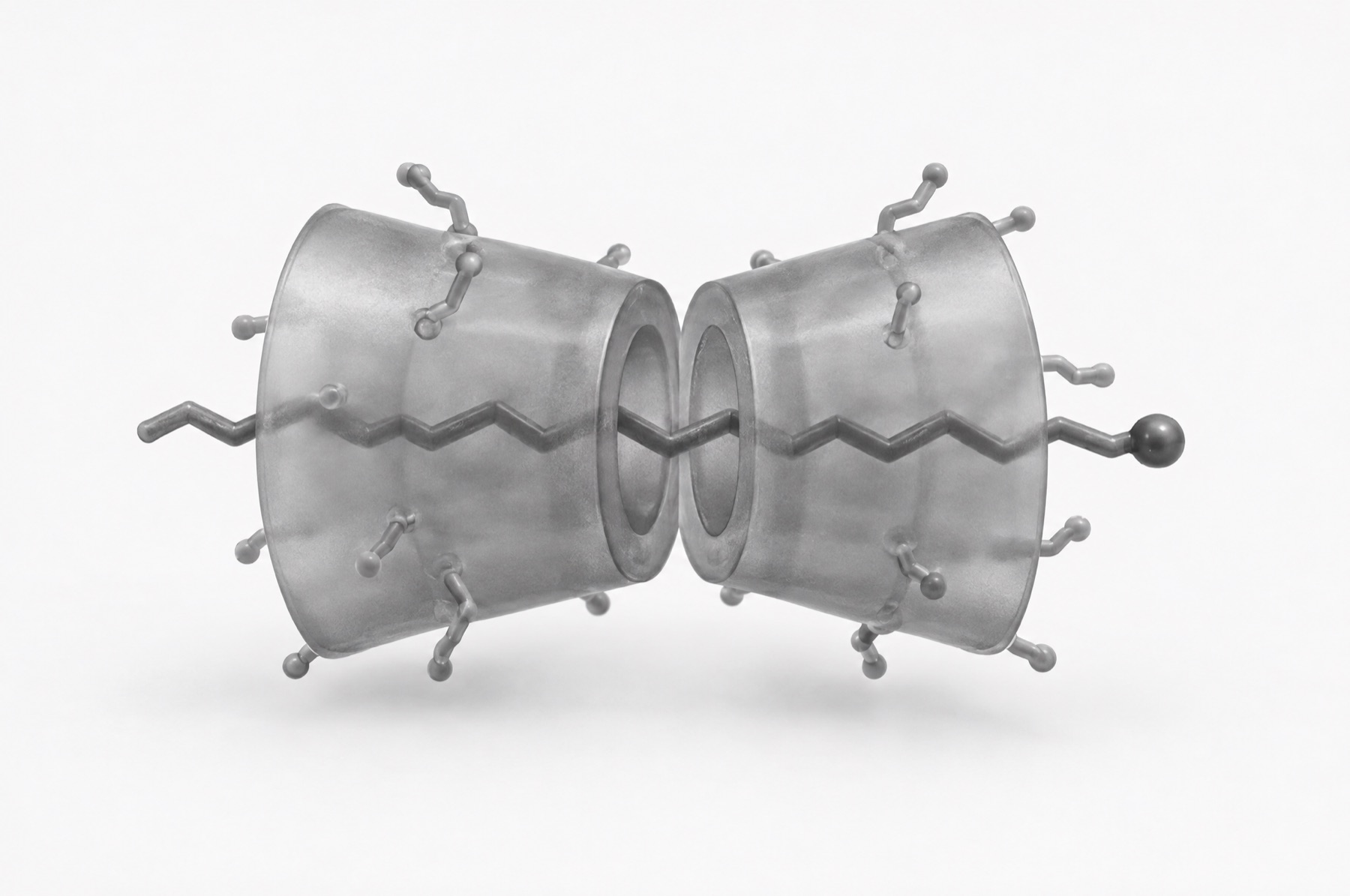
- 1Alpha-cyclodextrin ring (HPαCD) — two per complex
- 2Hydroxypropyl groups on the ring rims
- 3Caprate (C10) fatty-acid chain, threaded through both cavities
- 4Carboxylate head of sodium caprate
UNDC-005 is a 2:1 inclusion complex (clathrate) of hydroxypropyl-alpha-cyclodextrin (HPαCD) with sodium caprate (C10): two HPαCD rings sleeved around a single capric acid chain. The complex does not chemically bind lipids: the hydrophobic interior of the HPαCD cavity is proposed to capture and contain phospholipids and sphingolipids, while excluding cholesterol. Schematic; not to scale.
Proposed mechanism of action
Mechanism of action of UNDC-005 in Niemann-Pick disease type C1
The disease state, and the two levels on which UNDC-005 is proposed to act.
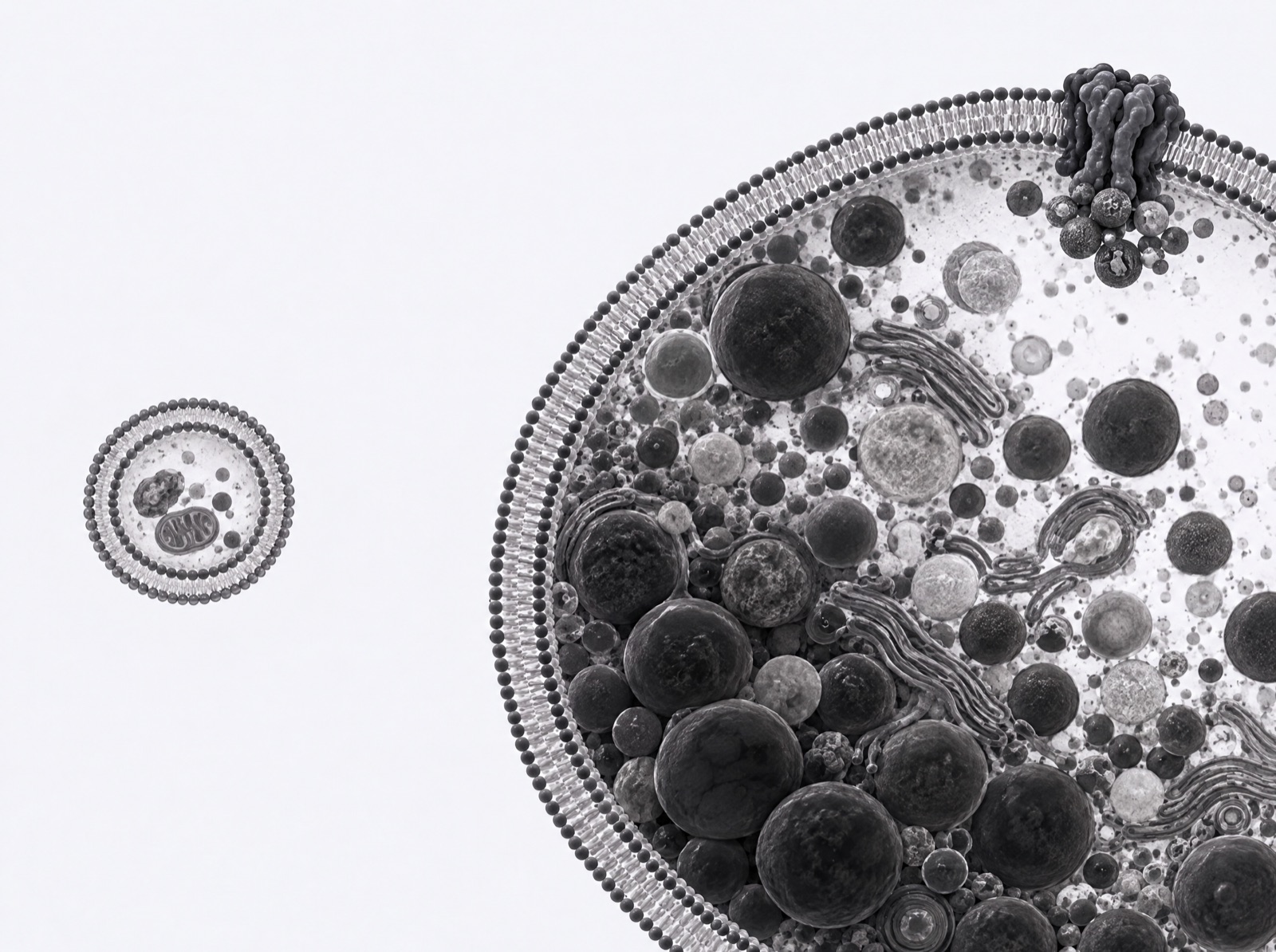
Lipid the lysosome cannot clear
- A loss-of-function mutation in NPC1 — about 95% of cases, with NPC2 accounting for about 5% — disables the lysosomal transport protein.
- Cholesterol cannot leave the lysosomal lumen, and sphingomyelin, glycosphingolipids and ceramides — fat-like molecules that make up cell membranes — accumulate alongside it as lysosomal lipid handling breaks down.
- The lumen becomes less acidic, and the hydrolases — the lysosome’s digestive enzymes, which work only in acidic conditions — progressively lose activity.
- Autophagosomes — vesicles that carry worn-out cell material to the lysosome for recycling — cannot fuse with dysfunctional lysosomes, and autophagic flux is impaired.
- Chronic inflammasome activation and autophagy failure drive the death of Purkinje cells, large neurons in the cerebellum that coordinate movement, and progressive neurological decline.
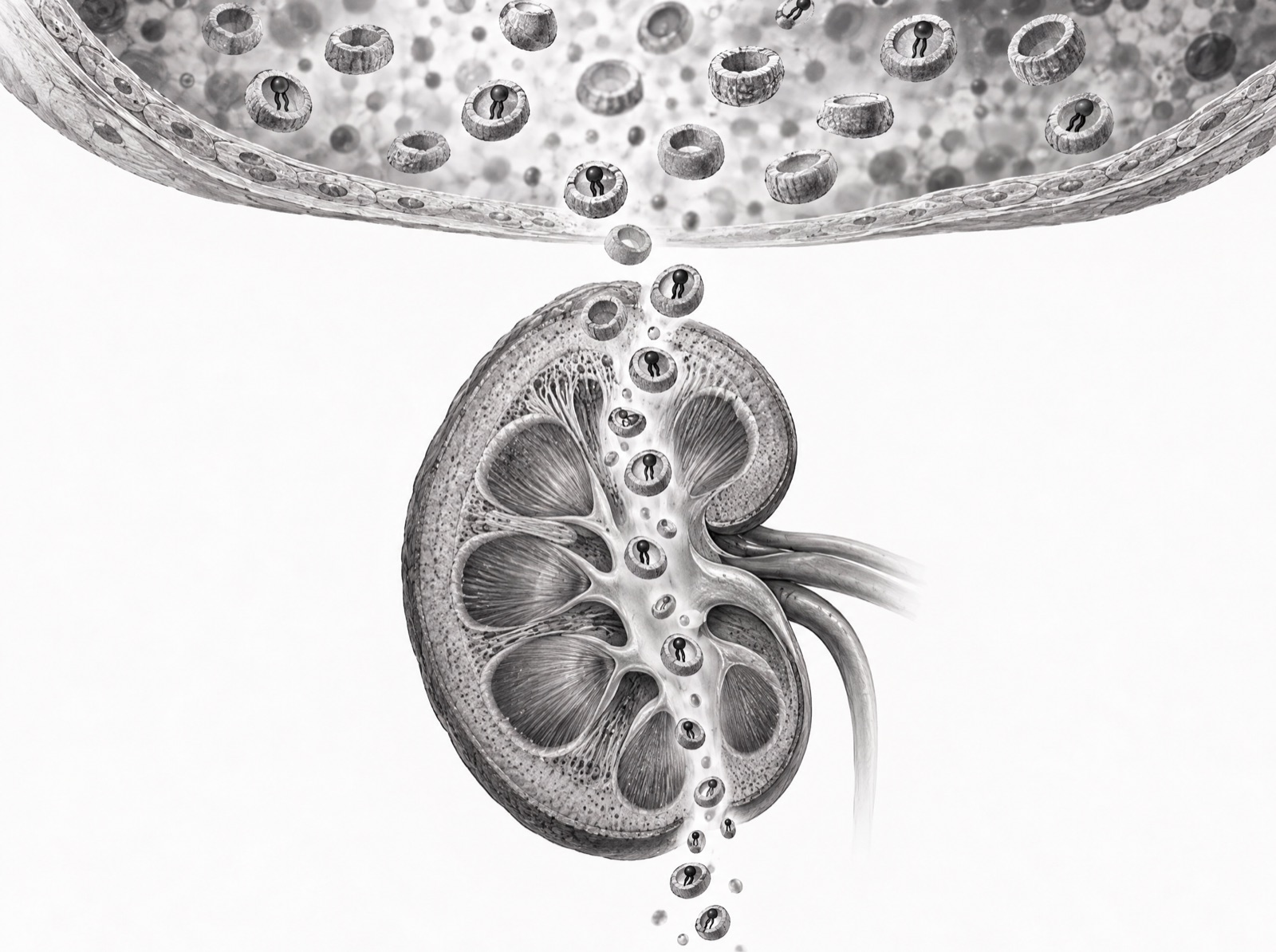
Direct removal through the kidney
- HPαCD is proposed to capture phospholipids and sphingolipids circulating in the bloodstream within its hydrophobic cavity.
- The capture is size-selective: the cholesterol sterol ring is a poor fit for the 0.47–0.53 nm HPαCD cavity, so cholesterol is largely excluded and retained by the cell.
- Because cholesterol is largely excluded, UNDC-005 is not expected to deplete cholesterol from the hair cells of the inner ear — the mechanism linked to hearing loss with beta-cyclodextrins.
- The kidney filters the HPαCD–lipid complex, which is excreted intact in urine.
- Urinary phosphatidylcholine increased after oral dosing (p = 0.0367).
- This mechanism has not been established in clinical trials.
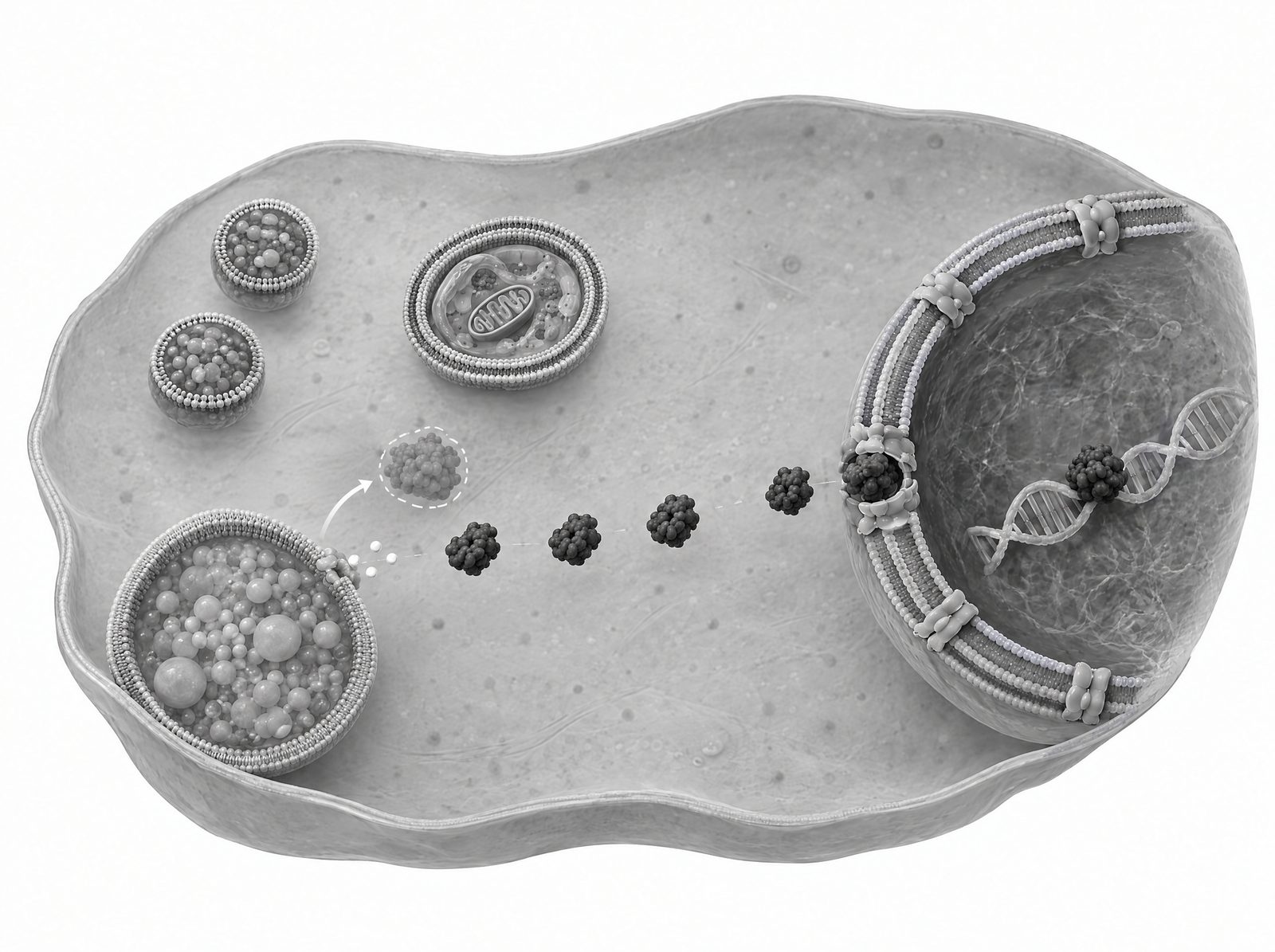
- 1Lysosome
- 2mTORC1, released from the lysosomal surface and inactive, no longer holding TFEB in the cytoplasm
- 3Lysosomal Ca²⁺ release via MCOLN1 (TRPML1) and calcineurin — a separately described route to TFEB activation, shown for context; not demonstrated for UNDC-005
- 4TFEB moving toward the nucleus
- 5Nuclear pore
- 6TFEB bound to CLEAR elements in DNA, switching on lysosome and autophagy genes
- 7New lysosomes and an autophagosome
TFEB signalling in the cell
- A lower lysosomal lipid burden is proposed to relieve the signal that keeps the lysosome’s own repair programme switched off. When lipid accumulates, the nutrient sensor mTORC1 remains active on the lysosomal surface and holds the transcription factor TFEB in the cytoplasm; lysosomal cholesterol is one of the signals that keeps mTORC1 in that active state (Castellano 2017).
- As the lipid load falls, mTORC1 activity declines and TFEB is dephosphorylated and moves into the nucleus.
- There it activates the CLEAR network, switching on genes for lysosome formation, autophagy, and lipid degradation and recycling — helping burdened lysosomes clear their contents.
- This is a proposed consequence of reduced lipid load rather than a second, independent action of the drug: the Company’s position is that phospholipid scavenging, not direct TFEB activation, drives the therapeutic mechanism.
- TFEB activation has been reported for other cyclodextrins — hydroxypropyl-beta-cyclodextrin (Song 2014) and hydroxypropyl-gamma-cyclodextrin (Singhal 2020) — but has not been demonstrated for HPαCD.
- This mechanism has not been established in clinical trials.
Both proposed mechanisms converge on the same intended result — reduced lysosomal lipid burden, restored autophagic flux, suppressed inflammasome activation, and neuronal survival.
Adapted from the Company’s scientific materials. The disease cascade is as described for NPC1 in the published literature. The two proposed mechanisms of UNDC-005 are the Company’s intended mechanism of action: HPαCD is proposed to capture pathogenic phospholipids and sphingolipids in circulation within its hydrophobic cavity for renal excretion, and the resulting reduction in lipid load is proposed to activate TFEB-mediated lysosomal biogenesis. Urinary phosphatidylcholine excretion was observed in an exploratory human pharmacokinetic and pharmacodynamic assessment (p = 0.0367). Neither proposed mechanism has been established in clinical trials. Illustrations are schematic and not to scale.
An oral drug that reaches the bloodstream
Cyclodextrins are large, water-soluble ring molecules that the gut barely absorbs: taken by mouth on their own, only about 1–2% reaches the bloodstream. Complexing HPαCD with sodium caprate, a well-characterized intestinal absorption enhancer, raised systemic absorption to 50% in an exploratory human assessment. That means an oral dose of UNDC-005 can enter the circulation, where it is proposed to capture lipids — without the intravenous or intrathecal administration required by investigational cyclodextrin therapies.
Oral absorption of cyclodextrin formulations
Percentage of dose detected in morning urine 8 hours post-dose (systemic absorption)
Published literature: van Ommen 2004, a rodent disposition study. Clathrate and comparator formulations: an exploratory human pharmacokinetic and pharmacodynamic study in which the clathrate significantly outperformed a physical mixture of the same components (p = 0.0079), with phosphatidylcholine excretion confirmed (p = 0.0367). Figures for α-CD alone and HPαCD without C10 are approximate as reported.
Six sugars, not seven.
Beta-cyclodextrins form seven-sugar rings with a cavity large enough to accommodate cholesterol, which depletes cholesterol from cochlear hair cells. Alpha-cyclodextrins form six-sugar rings; the HPαCD cavity measures 0.47–0.53 nm, too narrow to accommodate the cholesterol sterol ring well. In a head-to-head measurement across nine cyclodextrins, HPαCD bound cholesterol with roughly 39-fold lower affinity than HPβCD (105 versus 4,072 M⁻¹) and solubilised around 150-fold less of it (Davidson 2016).
This is a constraint of molecular geometry rather than a formulation choice, and it is the basis for our belief that UNDC-005 does not carry the ototoxicity mechanism associated with the beta-cyclodextrin class. This has not been confirmed in clinical trials.
Preclinical result in mice. Results in animal models may not be predictive of results in Company-sponsored clinical trials.
What has been observed in humans, and by whom.
Every study below was conducted by third parties before the Company in-licensed UNDC-005. Myra EB Bio has not conducted clinical trials in any indication.
| Source | Type | Model / population | Finding | Statistical support |
|---|---|---|---|---|
| Example 15 Licensed patent data |
Human PK/PD (exploratory; not IRB-registered) | Human subjects, four HPαCD formulations | Approximately 50% of the administered dose recovered in urine following oral dosing of the HPαCD/C10 clathrate, versus approximately 1–2% for native HPαCD; direct phosphatidylcholine target engagement confirmed; clathrate structure essential; selectivity for phosphatidylcholine over lysophosphatidylcholine confirmed | Absorption p = 0.0079; PC clearance p = 0.0367 |
| Amar 2016 NCT01131299 |
Human randomized controlled trial (IRB approved) | 75 healthy adults, oral alpha-cyclodextrin | Oral alpha-cyclodextrin, 6 g daily for 12–14 weeks, was well tolerated with no serious drug-related adverse events. The primary endpoint, plasma total cholesterol, was not significantly changed; a 10% reduction in small-LDL particle number was observed. Supports the human safety bridge for the 505(b)(2) strategy. A metabolic and lipid study in healthy adults — not a disease trial. | Small-LDL particle number p < 0.045; primary endpoint not significant |
| Davidson 2016 | Peer-reviewed preclinical ABR study | Mice, auditory brainstem response at 12 weeks | HPβCD: 100 dB hearing loss (complete deafness). HPαCD: 40 dB (normal hearing range), no audiological impairment. Directly measured, not extrapolated. | Peer-reviewed; directly measured |
| Example 14 Licensed patent data |
In vivo neurodegenerative | SOD1 ALS mice; HTT Huntington's disease mice (Jackson Labs) | HPαCD preserved body weight versus untreated animals in both ALS and Huntington's models; delays disease-associated decline | HTT p < 0.0001; SOD1 p < 0.0001 |
| Example 16 Licensed patent data |
Mechanistic selectivity analysis | Urinary biomarker analysis of the Example 15 data | UNDC-005 selectively clears phosphatidylcholine without depleting LPC or LPA; preserves sPLA2 inhibition; distinguishes UNDC-005 from LPC-scavenging cyclodextrins | Directional signal consistent across all LPC and LPA urinary fractions |
| Begum et al. 2026 | Preclinical | Validated Krabbe disease animal model | HPαCD reduced psychosine in brain, spinal cord and sciatic nerve, improved neurobehavioural performance, reduced astrogliosis and increased myelin basic protein, and produced no electrophysiological or histological signs of ototoxicity. Lifespan was extended by a small but statistically significant margin, which the authors note should be interpreted with caution. Dosed intraperitoneally, not orally. | Preclinical |
The Company has not conducted clinical trials in any indication, including NPC1, and no assurance can be given that UNDC-005 will demonstrate safety or efficacy in NPC1 or any other indication. All studies above were conducted by third parties prior to the Company's in-licensing of UNDC-005. Results in animal models and exploratory human pharmacodynamic studies may not be predictive of results in Company-sponsored clinical trials.
Composition, formulation, and the human data, in one estate.
Issued
An issued US patent covers the HPαCD molecule and the 2:1 HPαCD/C10 clathrate formulation, including the human pharmacokinetic and pharmacodynamic data. Exclusively licensed worldwide.
Seven and ten years
Orphan Drug Designation eligibility carries seven years of US and ten years of EU market exclusivity per indication, independent of patent term. Designation has not yet been granted.
If granted
Priority Review Voucher eligibility follows established FDA precedent for rare pediatric diseases.
Designations and vouchers described here are eligibility positions, not grants. There can be no assurance that any designation will be granted, or that any voucher will be issued or realised at any particular value.
Papers and presentations
The published literature underlying the UNDC-005 program.
Company posters and conference presentations will be added here as they become available.